Leadership Section: SDRC Advocacy
In the 2019-2020 academic year – 1 in every 5 - undergrad students reported having a disability. These students contribute diverse abilities, perspectives, and experiences that enrich our campus community. However, they often encounter systemic obstacles in accessing higher education, essential accommodations, and support services crucial to their success. To address these challenges, USC must prioritize advocacy for inclusive policies, foster accessible environments, and promote awareness. By doing so, we can cultivate a campus culture where every student can flourish and reach their full potential.
Upon my graduation from Carolina in May, I will be attending Law School, to become an attorney and be an advocate for those who cannot best advocate for themselves. Disability advocacy is one of the reasons I decided to go to law school to advocate for the rights and needs of individuals with disabilities, ensuring that they are fully included, empowered, and given the opportunities they deserve to thrive in every aspect of life. Drawing from my experiences serving as a hearing chair on the Carolina Judicial Council, I have learned valuable skills in conflict navigation and transparency. These skills, coupled with effective questioning strategies, equip me to identify gaps within the current disability support system at USC and streamline processes for best advocacy. Throughout my time at USC, I have witnessed firsthand instances where students have not received adequate support for their disabilities. I think the Disability Resource Center has too broad of a scope affecting its ability to provide personalized assistance to each student.
Here at the University of South Carolina, the Student Disability Resource Center serves a wide range of students from dietary restrictions, ADHD, extra testing time, wheelchair-bound, or mental health conditions. This university has over 35 thousand students and all those with a registered disability are served through the 11 staff members at the SDRC. This is not personalized to the students who need accommodation, modifications, and support. There are not enough staff members to offer personal advocacy for each student. Therefore, it is imperative to enhance the application process and accommodation procedures to better meet the individual needs of students.
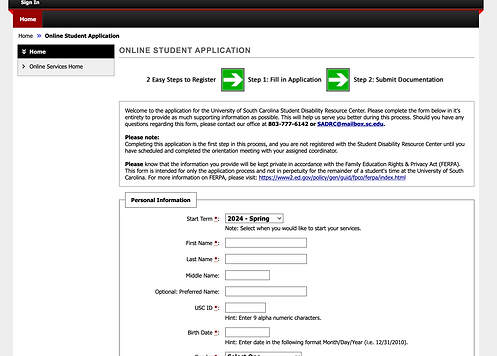
To personalize the application process, I propose integrating optional checkboxes on the application for students to provide consent or approval for the Student Disability Resource Center (SDRC) or an advisor to contact their professors on their behalf. Additionally, the application could feature a section where students can opt-in to tailor their accommodations further, such as specifying variations in test timing or preferences for class registration. This would empower students to customize their support services according to their individual needs and preferences, fostering a more inclusive and accommodating environment at USC.
I
Step 1: Conduct forums for needs analysis.
I would conduct forums and interview students utilizing my questioning strategies learned through CJC to identify gaps current students face within the SDRC. These forums would provide a platform for students to express their concerns, share their experiences, and suggest improvements. Also, I would collaborate with student organizations dedicated to disability advocacy to ensure a full understanding of the student body's diverse needs.
Step 2: Work with IT to add to the sections
Work with USC and accessiblelearning.com, where the online student application is housed to add to the application to include 2 sections students can opt into for an advisor to reach out to professors on their behalf or personalize accommodations. This collaboration would involve engaging with IT professionals to integrate user-friendly features into the online application platform. By incorporating these sections, we aim to streamline the process for students while enhancing their ability to communicate their specific accommodation needs effectively.
Step 3: Increase the visibility of the SDRC
Even if this is just a spot for drop-in questions, Close-Hipp is not passed by all students, so putting SDRC staff at a popular spot, such as Russell or the Wellness and Fitness Center, will encourage students to come in, ask questions, and work to personalize accommodations. Additionally, organizing informational sessions or workshops in high-traffic areas of the campus can raise awareness about the services offered by the SDRC and encourage students to seek support proactively. By making the SDRC more visible and accessible, we can ensure that students feel comfortable reaching out for assistance and guidance.
Step 4: Refine the Application Process/Streamline
In this step, I would focus on enhancing the clarity and user-friendliness of the application process. This would involve collaborating with the IT department to develop intuitive interfaces on the websites and clear instructions for students navigating the application. Additionally, I would work closely with the Disability Resource Center staff to streamline administrative procedures and expedite the provision of accommodations. By refining the application process, we aim to reduce barriers to access and ensure that every student at USC receives the support they need to succeed academically and thrive in their college time.
Step 5: Reviewing Success
To ensure the effectiveness of the application changes it's important to implement multiple evaluations. One approach would involve forming an advisory committee. This would include representatives from student organizations, faculty members, SDRC staff, and IT professionals. This committee could periodically meet to review the application process and its impact on student accessibility. I would also include regular surveys and feedback mechanisms to ensure that the application changes are effective. This would be emailed following someone finishing the application and settling into the semester. This could uncover nuanced issues or concerns that people would be more willing to share anonymously.
In my proposal, students' confidentiality remains a top priority, based on my time learning this on CJC and in line with the principles outlined by the SDRC. Their statement on confidentiality found on their website emphasizes that information about students will only be shared with appropriate offices when deemed necessary to support their educational and professional pursuits, and that students must be included in any conversations related to them. With my suggested changes to the application process, this confidentiality commitment stays intact. By including optional checkboxes for students to give their consent for the SDRC or an advisor to contact professors on their behalf, we ensure that students have control over the sharing of their information. This aligns with the idea that information will only be shared with consent, respecting students' privacy.
In conclusion, advocating for the rights and needs of individuals with disabilities is crucial in fostering an inclusive and equitable campus environment. As we strive to address the systemic barriers faced by students with disabilities at the University of South Carolina, we must prioritize advocacy for inclusive policies, foster accessible application processes, and promote awareness.
Through my proposed initiatives, including conducting forums for needs analysis, collaborating with IT to enhance the application process, increasing the visibility of the SDRC, and refining the application process to streamline accommodations, we can work towards creating a campus culture where every student has the opportunity to flourish and reach their full potential here at USC. Maintaining students' confidentiality remains vital throughout these efforts. By ensuring that students have control over the sharing of their information through optional consent checkboxes, we uphold their privacy rights while providing necessary support services.
By leveraging my experiences and skills gained from serving on the Carolina Judicial Council and engaging with the USC community, I aim to contribute towards a more inclusive and supportive campus environment where all students can thrive. Together, let us work towards a future where every student, regardless of their abilities, is given the opportunities they deserve to succeed.
Current SDRC application interface: