Fostering Community: Relationship Building and Mentorship

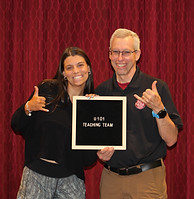
Growing up I always dreamed of going to college - meeting my roommate, vibrant campus life, and making friends left and right during my freshman year. But, moving into my dorm at the height of a global pandemic in 2020, things did not go down the way I imagined. Everything turned digital, and in-person connections were replaced by online interactions. As I navigated this new normal, I recognized the role and value of community during college. Amid changes, the Carolina community provided support and connections in the way I needed my first semester. This understanding of the importance of community and genuine connections pushed me to be a leader and mentor for students transitioning to college. I applied to be an Orientation Leader and a University 101 Peer Leader with the desire to foster the community that I yearned for during my freshman year at Carolina. As I worked through the challenges and unexpected hurdles in my roles, I discovered the power of genuine connections and building relationships to truly support and mentor my students. Through being a University 101 Peer Leader and Orientation Leader I became a more supportive mentor by embracing authenticity.
I began my path in mentorship with The Office of New Student Orientation. I learned relationship building through my time as an Orientation leader, and later a lead team member in my second year. Starting as an Orientation leader right after completing my freshman year, I wrestled with the feeling of barely being old enough to guide my groups around campus. Thus, due to both my immaturity and my age, creating community in our groups and allowing the students to open up and ask questions to feel ready for USC was difficult, to say the least. Through trial and error, I learned that true community emerges when you create an environment of openness to build those relationships. Icebreakers and fostering inclusive communication became my tools of choice, realizing that listening to students' concerns, no matter how trivial, was necessary for building trust and getting closer to them. The realization dawned that community-building is never a one-size-fits-all endeavor. Instead, it means establishing a safe space and allowing for genuine connection, a basis where effective mentorship can thrive.
In my second year in the orientation office, I gained the opportunity to serve as a lead team member - a mentor for the orientation leaders. This role demanded not only active engagement with the incoming students but also involvement in behind-the-scenes work, assisting parents and guests. Here, the challenge intensified as I worked to mentor orientation leaders who, in many cases, were students older than me. Navigating being a leader for those who were older than me made it difficult to build trust and created tension within the teams. The key remained relationship building to become an effective mentor. As we encountered disagreements within the team, I leaned heavily on the skill of active listening to reconcile conflicting perspectives. The orientation leaders felt a gap and tension between the lead team staff and the rest of the orientation leaders. Building a community, in this context necessitated a genuine understanding of the concerns and viewpoints of both the orientation leaders and the lead team staff. I had to set up and facilitate a time where everyone sat down and talked through their feelings and pent-up emotions to decipher how we should work to resolve this. Although it was intense in feelings, we were able to break down the tension and decide that smaller groups to create community were needed. Through this process, I understood that we would be at a standstill until we could build relationships, and thus community. This experience improved my ability to foster relationships within the team and as a mentor.
Enter my junior year, and an excellent opportunity appeared - to apply and become a Peer Leader in a University 101 class. Overflowing with enthusiasm, I eagerly embraced the prospect of becoming a Peer Leader. Amid the sea of virtual interactions during my first semester at USC, my only in-person class, University 101 (U101), provided a small place for connection. Despite the efforts of my professor and peer leader to navigate these circumstances, I struggled to find my place throughout my time in the class, just feeling like I could be myself and share my thoughts without judgment. I had the realization that I could not let this chance of being the mentor I needed slip away. I was filled with such excitement as I envisioned the potential of connecting with a fresh group of nineteen first-semester students at USC, baby Gamecocks if you will. The anticipation was not just about leadership; it was about becoming the impactful leader I longed for during my first days at Carolina, to be the person I needed when I first stepped onto campus.
However, the first day did not unfold as envisioned. Faced with nineteen first-year students staring at me, the anticipated community-building exercise turned into a somber march through the syllabus. Frustration and disappointment set in as expectations clashed with reality. I do not know why I expected the first day to be filled with us creating community and sharing our deepest secrets, but when things did not go as expected I felt frustrated and failed.
Adapting became imperative, and my only option, because I surely was not going to go through that every day. I received guidance from my EDLP teacher, co-instructor, and friends who, like me, were also peer leaders. They all recommended holding individual meetings with each student. This allows them to share with me things they would not share with our whole class and get to know them on a deeper level. One-on-one meetings with students revealed a common thread of each of their struggles with the transition from high school to college courses. Specifically, one student named Sara shared how she felt like “USC wasn’t living up to her expectations.” We connected through our meeting as I reflected on my first semester with her and shared my challenges. We connected on trivial things like struggling in classes, but also making friends in each of our sororities, connecting with your roommate, and the pressure on social media to show you are having the time of your life in college. Even though it was a twenty-minute meeting on the horseshoe, we were able to connect way more than we ever could in a ninety-minute class and started to build a relationship. Armed with this understanding, my eagerness to connect with the new students grew, fueled by the desire to be the support system I wished I had during my challenging transition. I started to recognize I could not be the mentor my students needed if I did not first build the relationships within our classroom.
I also had been sharing my struggles with my co-instructor Tom, who continually encouraged me and shared how much he knew I could connect with the students. Knowing that he was supporting me allowed us to have a strong relationship, which was the basis for growing my relationship with our class. Active listening became my tool for understanding their needs. Collaborating with my co-instructor Tom, we reshaped the syllabus to include a study skills and exam preparation session before finals. Many of the students shared with me that classes and the workload were stressing them out which was affecting their outlook on the semester. I took the lead on crafting a lecture that encapsulated not just academic advice but the insights and reminders I had gained over my four years at Carolina (Study Skills Presentation see below).
Taking Speech 140: Public Communication marked a pivotal stage in my leadership, particularly in practicing my public speaking skills. One topic and framework that particularly improved me as a speaker was ‘Becoming a Skilled Listener.’ Although it sounds counterintuitive, we learned you cannot be a skilled public speaker, without being an even more skilled listener. We studied the obstacles to good listening, specifically the difference between external and internal obstacles and how they could hurt us as listeners. External obstacles include outside noise and focusing on the speaker rather than the message. Internal obstacles include being preoccupied, having preconceptions, or holding stereotypes/assumptions (Lecture Notes see below). Dr. Cornelison's emphasis on overcoming these hurdles resonated deeply with me as I saw this as a struggle. As a listener, I identified a recurring challenge - being limited by preconceptions and internal objections. My focus on personal thoughts and feelings often overshadowed the importance of actively listening to others' concerns. This realization prompted a standard shift in my approach, urging me to confront, understand, and overcome these obstacles both as a listener and a speaker, thus enhancing my capabilities as a leader and mentor. Translating these insights from my Public Communication course into my roles as a peer leader and orientation leader, I recognized the imperative nature of listening to build strong relationships. When these relationships are built, you can grow community, and thus be a strong mentor. I found creating a sense of community was based on providing unwavering support during their transitional phases as their mentor.
While my Public Communication course significantly contributed to my growth as a leader and mentor, not all concepts proved equally valuable. The emphasis on fundamental communication concepts, such as oral argumentation and persuasion, led me initially to focus more on frameworks than on the crucial elements of listening and effective communication. The contrast presented in the class between 'Marketing' and 'Engagement' in communication, seemed organized on paper but posed challenges in practical life. We learned that there are two ways of seeing communication; marketing - convincing an audience to act based on existing beliefs; or engagement - focusing on changing the beliefs and motivations of an audience (Lecture Notes cont. see below). Real-life situations, particularly in my role in U101, demanded a different approach. The goal was not to convince or change beliefs but to create a supportive community.
Application is no longer available.
I also worked with a friend of mine, and a fellow peer leader to create a sheet of reminders of study skills they can use past their time in U101 (Study Reminders Takeaway). The result was a lecture focused on my own experiences as a student here, especially my struggles, fostering a genuine sense of community. Instead of going off what the U101 transitions textbook says was best for our students, learning to listen to what they needed was how I was able to best serve as their mentor. When the community was built, I was able to hear their feelings and feedback and continue to deepen our connections. I could not have done this until I built relationships with each of them, and my co-instructor Tom. Building relationships in our class was imperative to being an effective mentor and cultivating a classroom where they could be their authentic self. The lessons learned during my time in orientation, particularly the importance of open communication, active listening, and adapting to diverse perspectives, translated into building relationships in U101. The ability to hear their feelings, understand their feedback, and nurture deeper connections and relationships became the basis of effective mentorship for me as a peer leader. This allowed me to curate a classroom I needed my first semester, where I could be myself and the students could share their feelings in a judgment-free zone.
Putting these lessons into practice, I co-presented on creating intentional icebreakers at the NODA Southern Regional Orientation Workshop in March of 2021 (Conference Presentation). Emphasizing the role of creating an inclusive space in tailoring icebreakers to specific groups, we highlighted the idea that community building is not a one-size-fits-all effort. We shared insights with over 150 participants on the strategic approach to community-building and intentional icebreaking. We also ended by sharing a takeaway of some examples of such icebreakers (Takeaway see below). The emphasis was on understanding that the same icebreaker might not resonate across diverse orientation groups. Instead, we highlighted the importance of modifying icebreakers by gaining insights into each group's dynamics and needs. We shared how imperative it is to create a space where people can let their guard down and build relationships. This not only facilitated effective icebreaking but also laid the groundwork for cultivating a genuine sense of community within each orientation group. The success of the presentation reinforced the idea that effective leadership and mentorship start by building relationships to create the community you desire.
Application is no longer available.


My time with orientation, both my first year and second year on lead team, helped to make me the mentor I needed to be for our U101 class. Although I struggled in the beginning to connect with our class, I had the skill set to understand it starts with relationship building. Mentorship changes across different situations, and I learned to adapt based on the contexts, such as orientation and U101, but encountered, that in each, I could not create an inclusive and safe space without connecting with the students first. I learned it was not about the knowledge at hand, such as campus tours during orientation or study skills during U101, but rather fostering an environment where they felt seen, heard, and supported.
Facing challenges during my freshman year and desiring a sense of community, I decided to become a U101 Peer Leader and Orientation Leader, aiming to be a mentor who builds genuine connections. In these roles, I learned how authentic connections can make a significant difference in creating a supportive learning environment. Taking what I learned during orientation, I used icebreakers to break down barriers and made sure to listen to students' concerns as a peer leader. These experiences showed me that building a community is vital, and it is also crucial to adjust and adapt how I mentor based on what each group needs. By embracing my true self and openly sharing experiences, I have found that everyone can connect on a deeper level and feel comfortable seeking guidance. This authenticity has not only strengthened my mentorship approach but has also allowed for a more supportive environment.